
Obagi Retinol — Over-the-Counter Vitamin A for Skin Renewal
Obagi's over-the-counter retinol range includes the Retinol 0.5 and Retinol 1.0 — stabilised retinol products designed to accelerate cell turnover, reduce fine lines, and improve skin texture without the need for a prescription. The range also includes Retivance Skin Rejuvenating Complex, a gentler retinaldehyde-based night cream for those who want vitamin A benefits with minimal irritation. These products sit between cosmetic moisturisers and a Advanced-Protocol Retinoid in terms of both potency and results. Explore our full retinoids collection to compare all available vitamin A options.
As an Independent Nurse Prescriber, I position Obagi's OTC retinols as a useful stepping stone — particularly for patients who are new to vitamin A or who have been told to use retinol but are not yet ready for Advanced-Protocol Retinoid. They are well-formulated, stable products. However, I am always transparent: for patients seeking significant anti-ageing, pigmentation correction, or acne results, a Advanced-Protocol Retinoid or Medik8 Crystal Retinal will ultimately deliver more than an OTC retinol can. Browse the full Obagi Medical range for complementary products.
Retinol to Advanced-Protocol Retinoid — Your Progression Pathway
OTC retinol is an excellent starting point, but most patients will eventually benefit from progressing to Advanced-Protocol Retinoid for maximum anti-ageing results. Book a consultation with our Independent Nurse Prescriber to assess your skin, start your retinol journey, and plan a safe progression pathway from OTC retinol through to Crystal Retinal or a Advanced-Protocol Retinoid when your skin is ready.
Clinician's Pick
Obagi Retinol 0.5 — A Sensible Starting Point
If you are new to retinoids, the Obagi Retinol 0.5 is a well-tolerated entry point. It will introduce your skin to vitamin A, improve texture, and begin to build tolerance with minimal irritation. However, I want to be honest with my patients: for most people seeking meaningful anti-ageing, pigmentation correction, or acne control, you will eventually want to progress beyond OTC retinol. Medik8 Crystal Retinal (a retinaldehyde that works one conversion step closer to retinoic acid) or a Advanced-Protocol Retinoid will significantly outperform any OTC retinol product. Think of Obagi Retinol as your training wheels — excellent for building tolerance, but not your final destination.
— Mark Taylor, MSurg, INP, RMN
-
Obagi Retinol + PHA Refining Night Cream 50ml
Vendor:Obagi MedicalRegular price £110.00 GBPRegular price -
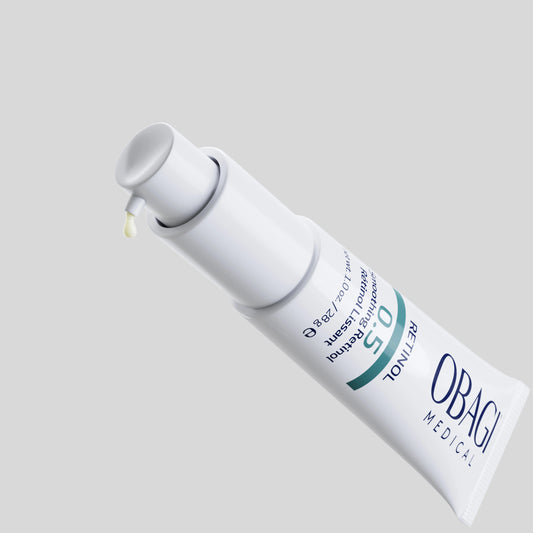
Obagi Retinol 0.5 28g
Vendor:Obagi MedicalRegular price £95.00 GBPRegular price -
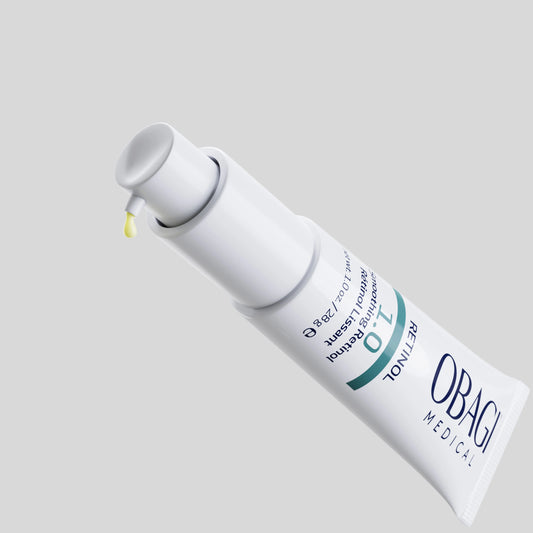
Obagi Retinol 1.0 28g
Vendor:Obagi MedicalRegular price £95.00 GBPRegular price



Key Ingredients
How to Introduce Retinol — Start Low, Go Slow
Weeks 1–2: Apply Obagi Retinol 0.5 on two non-consecutive evenings per week (e.g., Monday and Thursday). Cleanse → Retinol (pea-sized amount) → Wait 10 minutes → Moisturiser.
Weeks 3–4: If tolerated with no significant redness or peeling, increase to three evenings per week.
Weeks 5–8: Gradually increase to every other night, then nightly if your skin tolerates it.
Important: Always apply retinol to dry skin — damp skin increases penetration and the risk of irritation. Use a rich moisturiser afterwards, and always wear SPF 30+ the following morning. Some mild flaking during weeks 2–4 is normal and indicates the retinol is working (this is called retinisation).
Obagi Retinol — Frequently Asked Questions
What is the difference between retinol and Advanced-Protocol Retinoid?
Retinol is an over-the-counter form of vitamin A that must be converted twice in the skin before it becomes active (retinol → retinaldehyde → retinoic acid). Advanced-Protocol Retinoid is prescription-only retinoic acid — the active end-product — so it works immediately and at much greater potency. Retinol is gentler and more accessible but delivers slower, less dramatic results. Advanced-Protocol Retinoid is significantly more effective for anti-ageing, pigmentation, and acne, but requires a prescription and careful introduction. Most patients benefit from starting with retinol and progressing to Advanced-Protocol Retinoid over time.
Is Obagi Retinol 0.5% or 1.0% better for beginners?
Always start at 0.5%. Even if you feel your skin is resilient, retinoids cause a specific adjustment response (retinisation) that is independent of how tough your skin feels. Starting at 0.5% allows your skin to build tolerance gradually, reducing the risk of excessive peeling, redness, and sensitivity. Once you have used the 0.5% nightly for 8–12 weeks with good tolerance, you can consider stepping up to 1.0% — though at that point, I would often recommend progressing to Crystal Retinal or Advanced-Protocol Retinoid instead, as they offer superior results to a higher-percentage OTC retinol.
Can I use retinol around my eyes?
Yes, but with caution. The periorbital skin is significantly thinner than the rest of the face, which means retinol penetrates more deeply and can cause more irritation. If you want to use retinol around the eyes, apply a tiny amount (less than a grain of rice for both eyes) and buffer it by applying eye cream first. Alternatively, consider a dedicated eye product like ELASTIderm Eye Treatment Complex, which targets the eye area without the irritation risk associated with retinoids on thin periorbital skin.
How long does it take to see results from retinol?
Expect initial texture improvements (smoother, more refined skin) from around 4–6 weeks of consistent use. Improvements in fine lines and pigmentation typically require 8–12 weeks minimum. For meaningful anti-ageing results (deeper wrinkle reduction, significant firmness improvement), you will likely need 3–6 months — and honestly, this is where the limitations of OTC retinol become apparent. Prescription Advanced-Protocol Retinoid and Crystal Retinal deliver these deeper results more reliably and in a shorter timeframe.
Should I switch to Crystal Retinal or a Advanced-Protocol Retinoid?
In most cases, yes — eventually. OTC retinol is an excellent starting point for building vitamin A tolerance, but it has a ceiling in terms of results. Medik8 Crystal Retinal uses retinaldehyde, which is one conversion step closer to the active form (retinoic acid) than retinol, making it significantly more effective while remaining available without prescription. Prescription Advanced-Protocol Retinoid is the most potent option and is the gold standard for anti-ageing and pigmentation in clinical dermatology. I recommend booking a consultation so we can assess your skin and advise on the right time and product to progress to.
Not Sure Where to Start?
Two routes, both free. Take our 90-second skin quiz for an instant expert-built routine, or book a consultation with Mark for a conversation first.