
Collection: Vitamin C
Vitamin C is your morning defence. A potent antioxidant that neutralises free radical damage, brightens skin tone, stimulates collagen, and enhances the efficacy of your SPF. These are the formulations we trust — stable, effective, clinically dosed.

Vitamin C Serums — The Cornerstone of Every Skincare Routine
If there is one active ingredient that belongs in every skincare routine, it is vitamin C. As the most researched topical antioxidant, vitamin C neutralises free radical damage from UV exposure and pollution, brightens uneven skin tone by inhibiting melanin production, and supports collagen synthesis to maintain firmness. It is not optional — it is foundational. The question is not whether to use it, but which form and strength is right for your skin.
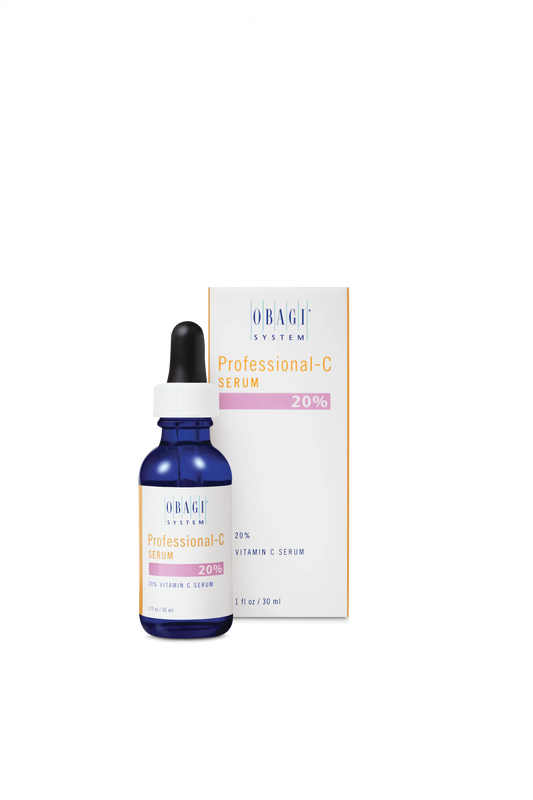
We stock vitamin C serums from both Medik8 and Obagi Medical — two very different approaches to the same ingredient. Obagi Professional-C uses pure L-ascorbic acid at pharmaceutical-grade concentrations (10%, 15%, and 20%) for maximum potency. Medik8's C-Tetra range uses tetrahexyldecyl ascorbate — a lipid-soluble form that is gentler, more stable, and ideal for sensitive or reactive skin. Both deliver clinical results and pair perfectly with the rest of our serum collection. The right choice depends on your skin type, tolerance, and goals.
Build Your Vitamin C Protocol
Not Sure Which Vitamin C Is Right for You?
Different forms, different strengths, different results. start a free written skin assessment and we'll assess your skin type, sensitivity level, and goals to recommend the right vitamin C serum — plus show you how to build it into a complete AM protocol with SPF for maximum protection and brightening.
Start Free AssessmentPersonalised vitamin C recommendation in 15 minutes
Clinician's Recommendation
The choice between Obagi and Medik8 vitamin C comes down to your skin's tolerance. For patients who want maximum potency and can tolerate a low-pH serum, Obagi Professional-C 15% or 20% is hard to beat — pure L-ascorbic acid at pharmaceutical grade. For patients with sensitive, reactive, or rosacea-prone skin, I recommend Medik8 C-Tetra — it uses a lipid-soluble form of vitamin C that absorbs without irritation and remains stable far longer than L-ascorbic acid. Both are excellent. If you are new to vitamin C, start with C-Tetra and progress to Obagi Professional-C once your skin has acclimatised.
— Mark Taylor, MSurg, INP, RMN
-
Obagi Professional-C 20% Serum 30ml
Vendor:Obagi MedicalRegular price £170.00 GBPRegular price -
Obagi Professional-C 15% Serum 30ml
Vendor:Obagi MedicalRegular price £145.00 GBPRegular price -
Obagi Professional-C 10% Serum 30ml
Vendor:Obagi MedicalRegular price £125.00 GBPRegular price -
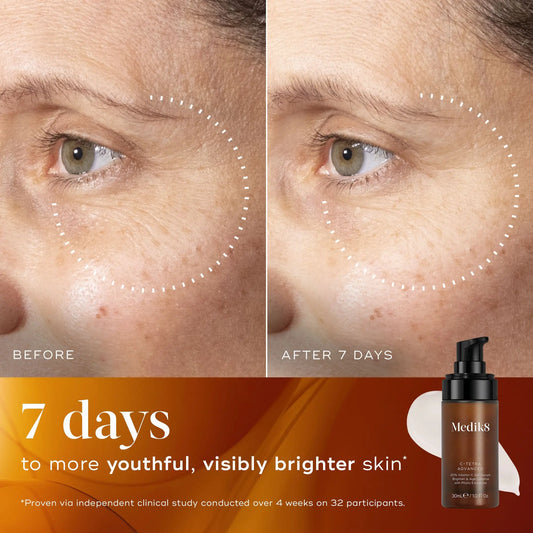
Medik8 C-Tetra Advanced 30ml
Vendor:Medik8Regular price £70.00 GBPRegular price -
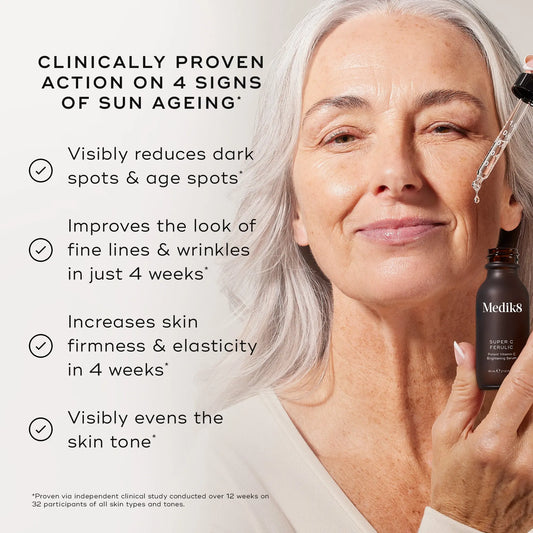
Super C Ferulic 30ml
Vendor:Medik8Regular price £69.00 GBPRegular price -
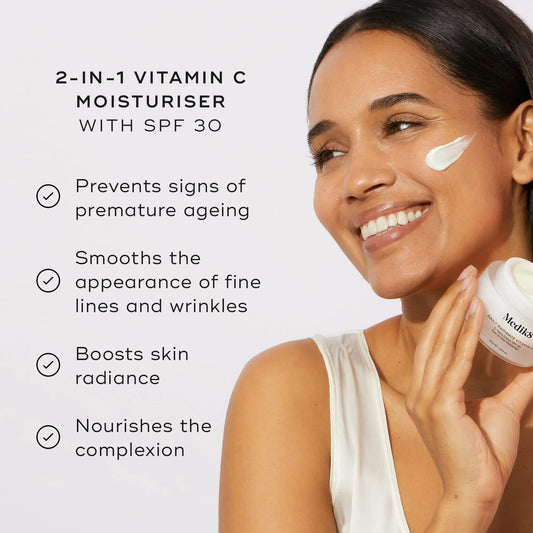
Medik8 Daily Radiance Vitamin C 50ml
Vendor:Medik8Regular price £60.00 GBPRegular price -
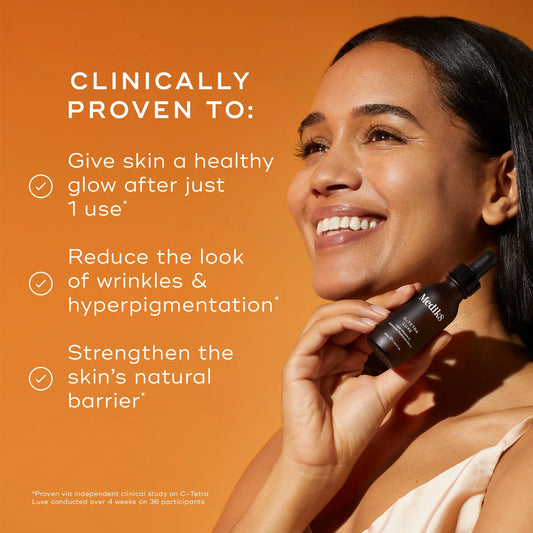
Medik8 C-Tetra Luxe 30ml
Vendor:Medik8Regular price £60.00 GBPRegular price -
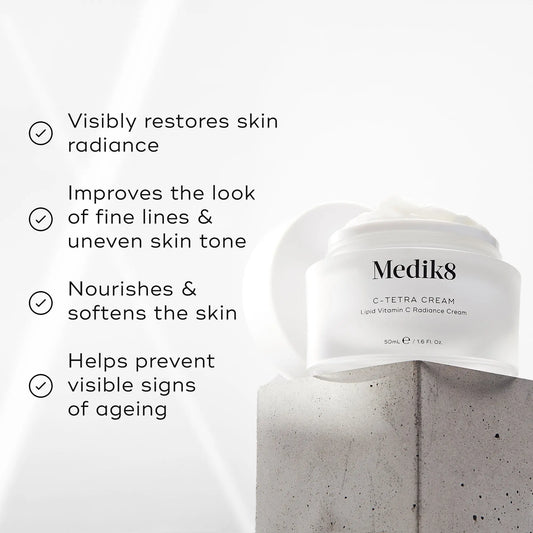
Medik8 C-Tetra Cream 50ml
Vendor:Medik8Regular price £55.00 GBPRegular price -
Medik8 Pure C15 2x15ml
Vendor:Medik8Regular price £49.00 GBPRegular price -
Medik8 C-Tetra 30ml
Vendor:Medik8Regular price £45.00 GBPRegular price









Key Ingredients in Vitamin C Serums
-
L-Ascorbic Acid
The purest and most potent form of vitamin C. L-ascorbic acid has the most clinical evidence behind it for brightening, collagen synthesis, and antioxidant protection. It requires a low-pH formula to penetrate effectively, which can cause tingling on sensitive skin. Obagi Professional-C delivers this at 10%, 15%, and 20% concentrations. Best for resilient skin types seeking maximum results.
-
Tetrahexyldecyl Ascorbate
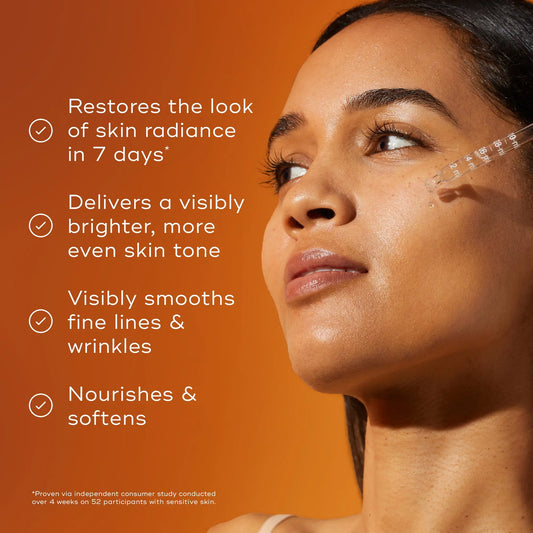
A lipid-soluble vitamin C derivative used in Medik8's C-Tetra range. Because it is oil-soluble, it penetrates the lipid barrier of the skin more easily and does not require a low pH — making it significantly gentler than L-ascorbic acid. It also remains stable for longer, meaning less risk of oxidation. Clinical studies show comparable brightening and antioxidant results to L-ascorbic acid, with far less irritation potential.
-
Ascorbyl Glucoside
A water-soluble, glucose-bonded form of vitamin C known for its exceptional stability. It converts to active ascorbic acid once absorbed into the skin, providing a slow-release brightening effect. This form is well-tolerated even by very sensitive skin types and is often found in hydrating vitamin C formulations. An excellent entry-level option for patients new to vitamin C.
-
Ferulic Acid
A plant-derived antioxidant that dramatically boosts the stability and efficacy of vitamin C. Research has shown that ferulic acid doubles the photoprotective capacity of vitamins C and E when combined. It also provides its own antioxidant and anti-inflammatory benefits. Look for it in the ingredients list alongside your vitamin C serum — it is a sign of a well-formulated product designed for real-world stability.
How to Apply Vitamin C for Maximum Results
AM Only: Vitamin C is a morning active. Apply it after cleansing on clean, dry skin. If you use a hydrating serum (like hyaluronic acid), apply vitamin C first and allow it to absorb for 1–2 minutes before layering. Always follow with SPF 30–50 — vitamin C boosts your sun protection and SPF prevents the oxidative damage vitamin C is fighting.
Application Tips: Use 4–5 drops for the full face and neck. Avoid the eye area with L-ascorbic acid formulas (it can sting). Pat gently — do not rub. If you experience persistent stinging or redness with L-ascorbic acid, switch to a lipid-soluble form like Medik8 C-Tetra. Store your serum in a cool, dark place. If the liquid turns dark brown or orange, it has oxidised and should be replaced.
Frequently Asked Questions About Vitamin C
What's the best form of vitamin C for skin?
There is no single best form — it depends on your skin. L-ascorbic acid is the most potent and best-studied form, ideal for resilient skin types that can tolerate a low-pH formula. Tetrahexyldecyl ascorbate (used in Medik8 C-Tetra) is lipid-soluble and significantly gentler — ideal for sensitive, dry, or rosacea-prone skin. Ascorbyl glucoside is the most stable and gentle, suitable as an entry-level option. All three deliver antioxidant protection and brightening; the difference is potency versus tolerance.
What percentage of vitamin C should I use?
For L-ascorbic acid serums, clinical research supports concentrations between 10% and 20%. Below 10%, the antioxidant effect is minimal. Above 20%, absorption does not increase significantly but irritation does. Start at 10% if your skin is newer to vitamin C and progress to 15% or 20% over 4–6 weeks. For lipid-soluble forms like tetrahexyldecyl ascorbate, lower percentages are effective because the molecule penetrates more efficiently — Medik8 C-Tetra at its standard concentration delivers comparable results to higher-percentage L-ascorbic acid serums.
Can I use vitamin C with retinoids?
Absolutely — they are complementary, not conflicting. The best approach is to use vitamin C in the morning (for antioxidant protection and brightening) and your retinoid in the evening (for cell turnover and renewal). This AM/PM split avoids any potential pH interaction issues and gives you the benefits of both actives. This combination is the foundation of the protocols we recommend at Stratum Clinic for anti-ageing, pigmentation, and overall skin health.
Why does my vitamin C serum change colour or oxidise?
L-ascorbic acid is inherently unstable and oxidises when exposed to air, light, and heat. A fresh serum should be clear to pale gold. If it turns dark amber or brown, it has oxidised and lost its efficacy — discard it and open a new one. To extend shelf life: store in a cool, dark place (a bathroom cabinet, not a sunny shelf), replace the cap immediately after use, and use within 2–3 months of opening. Lipid-soluble forms like tetrahexyldecyl ascorbate are far more stable and resist oxidation significantly longer — another reason Medik8 C-Tetra is popular with patients who prefer low-maintenance routines.
Medik8 C-Tetra vs Obagi Professional-C — which should I choose?
Browse the full Obagi vitamin C range or the Medik8 vitamin C range to compare. Choose Obagi Professional-C if you want maximum potency, have resilient skin, and are comfortable with a water-based, low-pH serum that may tingle on application. It uses pure L-ascorbic acid at 10%, 15%, or 20% and delivers the strongest brightening and collagen-stimulating effects. Choose Medik8 C-Tetra if you have sensitive, dry, or reactive skin, prefer an oil-based texture, or want a more stable product with a longer shelf life. It uses tetrahexyldecyl ascorbate — a gentler form that absorbs without irritation. Both deliver proven antioxidant protection. If you are unsure, book a consultation and we will recommend based on your skin assessment.
Not Sure Where to Start?
Two routes, both free. Take our 90-second skin quiz for an instant expert-built routine, or book a consultation with Mark for a conversation first.