
Pharmaceutical-Grade Vitamin C — Proven Antioxidant Protection
The Obagi Professional-C Serum range delivers L-ascorbic acid — the most bioavailable and clinically studied form of vitamin C — at pharmaceutical-grade purity. Unlike many high-street vitamin C products, Obagi formulates at a stable low pH to ensure maximum penetration and antioxidant efficacy. Available in three strengths (10%, 15%, and 20%), the range allows you to choose the right concentration for your skin type and build tolerance over time.
As a clinician, I consider a well-formulated vitamin C serum to be one of the three non-negotiable pillars of any serious skincare routine — alongside a retinoid and broad-spectrum SPF. Obagi Professional-C offers genuine pharmaceutical-grade L-ascorbic acid at concentrations that make a measurable difference to photoprotection, collagen synthesis, and pigmentation. This is not a cosmetic vitamin C — it is a clinical-grade active. Explore the full Obagi Medical range to see how it fits into a complete protocol.
Vitamin C + SPF Daily Defence Protocol
Pair your Obagi Professional-C Serum with a high-protection SPF for the ultimate daily defence against UV damage, free radicals, and premature ageing. Vitamin C boosts the efficacy of sunscreen by neutralising free radicals that slip past UV filters — together they offer significantly greater photoprotection than either product alone.
Clinician's Pick
Start at 15% — Then Progress if Your Skin Tolerates It
For most patients, I recommend starting with the Professional-C Serum 15%. It delivers a clinically meaningful concentration of L-ascorbic acid without the tingling or irritation that some people experience at 20%. Use it every morning for 2–3 months, and if your skin tolerates it well with no sensitivity, step up to the 20% for maximum antioxidant protection. The 10% is best reserved for genuinely sensitive skin or those new to active skincare entirely.
— Mark Taylor, MSurg, INP, RMN
-
Obagi Professional-C 10% Serum 30ml
Vendor:Obagi MedicalRegular price £125.00 GBPRegular price -
Obagi Professional-C 15% Serum 30ml
Vendor:Obagi MedicalRegular price £145.00 GBPRegular price -
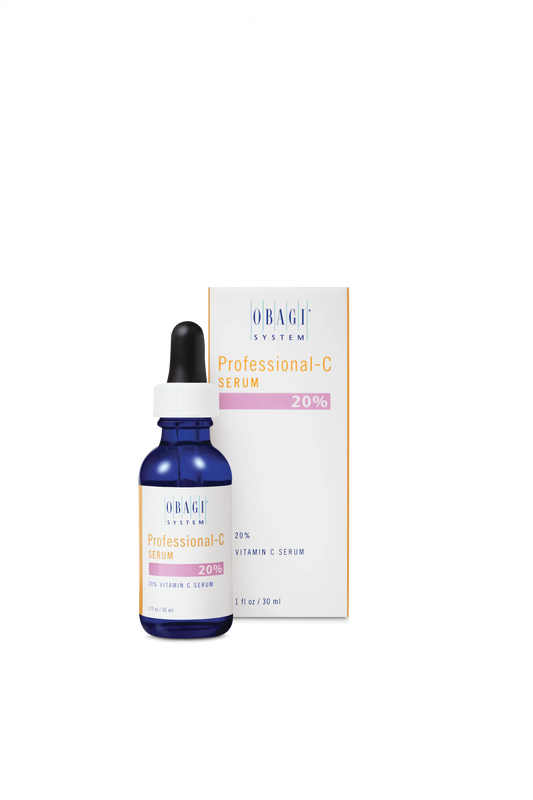
Obagi Professional-C 20% Serum 30ml
Vendor:Obagi MedicalRegular price £170.00 GBPRegular price


Key Ingredients
How to Use Vitamin C in Your AM Routine
Morning routine: Cleanse → Obagi Professional-C Serum (4–5 drops, press into skin) → Wait 1–2 minutes to absorb → Hydrating moisturiser → Broad-spectrum SPF 30+
Important: Vitamin C is a morning active. Apply it before your SPF every day for maximum antioxidant defence. Allow it to absorb fully before layering other products — this ensures the low-pH formula penetrates effectively before being buffered by your moisturiser.
Tip: If you are also using a retinoid at night, vitamin C in the morning and retinoid in the evening is the gold-standard split. Do not layer vitamin C and retinoids in the same routine as the pH requirements conflict.
Obagi Vitamin C — Frequently Asked Questions
What percentage of vitamin C should I use?
For most skin types, 15% is the ideal starting point — it delivers a clinically effective concentration without excessive irritation. If your skin is sensitive or you have never used active skincare, start at 10%. After 2–3 months at 15% with good tolerance, you can step up to 20% for maximum antioxidant protection. There is limited clinical benefit above 20%, so the Professional-C 20% represents the ceiling of what is useful in a topical serum.
Can I use vitamin C alongside retinoids?
Yes, but not in the same routine. Vitamin C works best at a low pH (around 2.5–3.5), while retinoids perform optimally at a slightly higher pH. Applying them together can reduce the efficacy of both. The best approach is vitamin C in the morning and your retinoid (Crystal Retinal, retinol, or Advanced-Protocol Retinoid) in the evening. This way each active works at its optimal pH, and you get comprehensive daytime antioxidant protection plus overnight cell renewal.
Why has my vitamin C serum changed colour?
L-ascorbic acid is inherently unstable and oxidises when exposed to air, light, and heat. If your serum has turned from clear or pale gold to a deep orange or brown, it has oxidised significantly and should be replaced. To extend shelf life, store your Obagi Professional-C in a cool, dark place (a bathroom cabinet is fine), keep the cap tightly sealed, and use it within 3 months of opening. A slight deepening in colour is normal over time, but a dramatic change indicates reduced efficacy.
How does Obagi Professional-C compare to Medik8 vitamin C?
Both are excellent clinical-grade vitamin C products, but they take different approaches. Obagi uses pure L-ascorbic acid at a low pH for maximum potency and penetration — ideal for those who want the strongest direct antioxidant hit. Medik8's C-Tetra range uses tetrahexyldecyl ascorbate, a lipid-soluble vitamin C derivative that is gentler and more stable but requires conversion in the skin. If your skin tolerates acids well, Obagi's L-ascorbic acid formulation is the more potent choice. If you have sensitive skin or find acids irritating, Medik8 may suit you better.
Do I still need vitamin C if I already use SPF?
Yes — SPF and vitamin C protect against UV damage through completely different mechanisms. Sunscreen filters and reflects UV radiation before it hits your skin, while vitamin C neutralises the free radicals that are generated by UV exposure that does get through. No sunscreen blocks 100% of UV, and free radical generation continues even after sun exposure ends. Using both together provides significantly greater photoprotection than either alone. Think of SPF as your shield and vitamin C as your repair crew. This combination is especially important if you are treating pigmentation or uneven tone.
Not Sure Where to Start?
Two routes, both free. Take our 90-second skin quiz for an instant expert-built routine, or book a consultation with Mark for a conversation first.